
Have you ever searched on Scalemates for 1:35 British and Commonwealth figures, or allied European nations such as France or Poland, and found them badly lacking? No? Maybe just me then.
Because it feels as though German WW2 subjects outnumber everything else combined, I’ve a suspicion that scale modelling companies view those of us who prefer alternative subjects — or don’t want any representation of Nazism in our display cabinets — as whatever the opposite of a cash-cow is. The corollary is that they view their own target market as just queueing up to be milked daily.
After seeing yet another newly released tranche of German WW2-era figures and thinking “who the heck needs even more of those?”, I decided to find out whether my impression of the figure market is actually fair.
So I went down the rabbit hole of search results and found that, if we’re talking German vs. Allied WW2, my guess was surprisingly en point. But… dive deeper into the numbers and a slightly more positive picture of the figure sector emerges.
How I searched
The Scalemates search is quirky and reliant on user-contributed data, so it takes some trial and error to find which combination of the many different filters will fetch the most comprehensive and/or relevant results.
It quickly became clear that the searches would have to be as consistent as possible, or the results would be skewed. Even choosing a different starting point (Group, Category, Product Type, or Scale) on the kit database page ultimately led to different numbers.
Take, for instance, these searches which should be equivalent. Choosing Product Type » Figures to begin a search, filtering by scale, then selecting as many relevant German WW2 topics as I could pick out of the list, I got fewer results than by starting with Scale » 1:35 and setting the same filters. Category » Humans (World War II) produced by far the fewest results.
As starting with the scale found more results, I stuck with it and chose the product type as the first filter. I confined the release years to 2010 onwards to get a more contemporary picture of the market. This turned out to be a good choice as it gives data for two distinctly different eras (pre- and post-pandemic).
To filter by nationality, you’ll find far more results by choosing relevant topics than you will by choosing a country or military organisation. This, I assume, is a quirk of how users tend to enter product data without always completing all applicable fields. For example, my search for French WW2 military figures filtered by topic found 142 matches, but just 18 of those had their nationality specified.
I considered whether to confine the searches to new tool releases, but decided that it would be more representative to include all releases and note the number of new tools in the table.
The results
| Nation | Total | New tool | 2010-19 | Av. p/a | 2020-now[1] | Av. p/a |
|---|---|---|---|---|---|---|
| Germany | 1820[2] | 1525 | 811 | 81 | 1009 | 160 |
| USA | 686 | 607 | 235 | 24 | 451 | 72 |
| USSR | 364 | 302 | 203 | 20 | 161 | 26 |
| UK | 314 | 258 | 125 | 13 | 189 | 30 |
| France | 142 | 128 | 39 | 4 | 103 | 16 |
| Other | 133 | 113 | 51 | 5 | 82 | 13 |
| Allied total | 1630 | 1403 | 653 | 65 | 986 | 157 |
- [1] includes Q1 2026
- [2] 22% of all 1:35 figures since 2010
- Av. p/a = rounded annual averages
- All numbers correct at the time of researching
The story behind the data
Assuming that we can extrapolate the bigger picture, what jumped out at me is the huge rise in 1:35 figure releases since 2020. The average per year has more than doubled (115% increase).
It’s impossible to break the results down by injection moulding, casting, and printing, but I think that it’s safe to ascribe this increase to the proliferation of new 3D print producers and the more general increase in new startups since the Covid pandemic.
Nowhere is that more obvious than the 164% increase in French figures, many of which have been produced by BlackSnake Model which was founded in 2024.
On that note, it seems that Allied figure releases generally have benefitted from the rising tide. They’re still miles away in absolute terms, but at least going in the right direction. Before 2020, Allied figure releases (combined) averaged just 80% of the number of German releases; since 2020, they have averaged 98%.
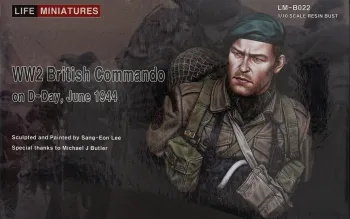
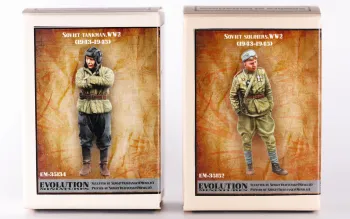
In that time, the annual release rate of American figures has tripled, British releases have more doubled, while French releases have quadrupled. However, Commonwealth and smaller Allied nations remain shamefully under-represented. Only with some theatres and nationalities can we can just paint a different unit patch on a British uniform.
Numbers game?
But I don’t want to give you the impression that I expect numeric parity between the major nationalities. That’s not realistic because the market probably wouldn’t support it, and I have to grudgingly accept that fact. Nor is it necessary for the same level of representation and choice as modellers who make German subjects enjoy. All that I’m asking for is that the armed forces personnel of the Allied nations are better represented with a widely varied selection of high quality figures. We’re not there yet.
Judging by what I found, it seems that at least some of the most under-represented nations and subjects may get attention from the many new 3D producers which have entered the fray. But what we don’t yet know — or at least, I don’t — is whether those newcomers can actually find sustainable success from that.
If they’re up for trying, I wish them the best of luck.

Add your comments