
Five things about the culture of scale modelling which I found surprising and a little weird in some way. “Only five?” you may ask. Well, yeah, I had to trim it down. Apart from their being unexpected, my primary criterion was that each one tells us something interesting about our hobby. And they each gave me an excuse to make a point…
Genre tribes and comfort zones
It may have been a Tankart book which instantly turned me into a wannabe scale modeller, but this was never going to be just about tanks for me. That would feel repetitious, even limiting, given how varied modelling can be. It would have meant missed opportunities, as each new genre has given me fresh interest and new challenges which have pushed my skills.

So why do so many modellers, perhaps the majority, work in just one discipline — tanks, aircraft, ships — and avoid straying from their lane? Some of you reading this may even further specialise in U.S. jet fighters or German tanks. I wonder at what point does a narrow interest become a comfort zone?
This is reflected by the stratified magazine market, with most publications being category-specific. In Britain, we have just two domestic multi-genre titles among about ten currently in print. There are also several defunct titles which were single-genre (and one which alternated between AFVs and aircraft). Even the two outliers are conservative and mainstream, so if you like your modelling magazine to cover sci-fi, real space, ships, or figures, you’ll have to settle for the occasional secondary feature.
The most popular genre is undoubtedly aircraft, but the majority of the most high profile and influential modellers make AFVs. Now that I think about that, it’s a bit odd.
But what I think is more disappointing is that this culture of siloing feeds tribalism and that’s not constructive for the hobby or healthy for us. I think that if more modellers were willing to shake off their genre straight jackets and step out of their comfort zones, it could be beneficial for them and for the hobby (culturally and probably commercially).
Average age
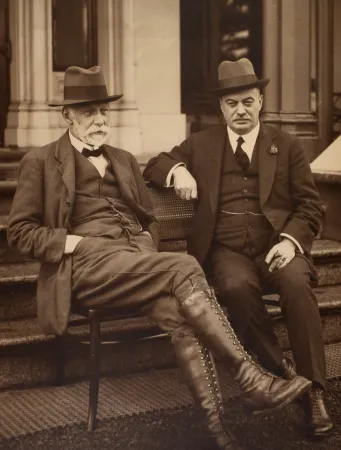
I was into RC racing in my teens, but the closest that I got to scale modelling was browsing on the other side of the model shop. So when I finally picked it up in my thirties, I felt like a latecomer. I kind of assumed that it was a young person’s hobby, partly due to the obvious advantages of dexterity and sharp vision.
In fact, it seems that I’m a lot younger than average, at least among English-speaking regions. Some European and Asian regions seem to have a younger demographic.
But if young people aren’t interested in scale modelling, at what age does the next generation of modellers begin? In creative things generally, young people bring vitality, fresh perspectives, and drive progress. And in hobbies, they are economically important simply by being involved for longer.
When the old hands put away their sprue cutters for the final time, we need young greenhorns who are keen to pick them up (the cutters, not the old hands). But I don’t know how we make this hobby more appealing to Gen Z or whichever letter we’re using now, and I’m not sure whether anyone does.
Group build
You can laugh, but when I first heard this term, I figured that it meant more than one modeller contributing to the same build! Maybe someone builds it and a friend at their club paints it. In my defence, this probably does occur.
I had no idea that it really just referred to a loose group of modellers who are linked by building approximately the same subject to a deadline. Maybe it didn’t occur to me because it's semantically inaccurate — there's more than one build going on — or because it doesn’t make much sense to me.
I could understand it more if the participants were given a specific challenge: maybe they build the exact same kit but each has to finish it in a unique style assigned at random, or maybe there has to be scratch building or groundwork. No doubt some group builds are run along those lines, but others are entirely devoid of imagination: “make any Sherman however you like”.
Zombie kits
Note to self: don’t be swayed by box art, always check the ancestry, and never buy a kit which is even older than me.
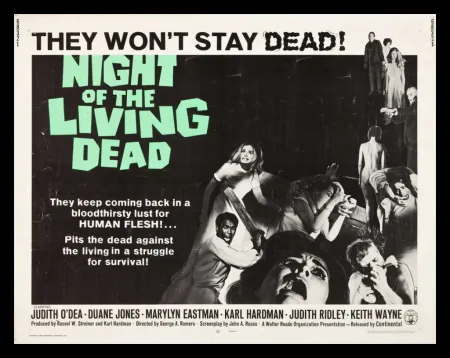
When I was still a novice, I accidentally bought a kit from 1984. While looking for nothing in particular, I found a Tamiya Porsche 956 in that eye-catching Canon scheme, saw Cartograf and ©️2001 on the box, and thought “it’s old, but it’s Tamiya so I’ll give it a go”. Little did I know how old.
Unimpressed by the outdated moulding’s lack of finesse and absence of detail, I built it anyway without satisfaction, only to discover that decals from 2001 may crack when applied… 🗑️
Tamiya is among several brands which like doing this to the unwary, with the 962C (1986), Audi Quattro (1983), and Mercedes 500SEC (1982) among those to have risen from the dead in 2025. They may be of interest to historians, but I’ll steer well clear.
So, Tamiya and co. Could you all pen a few more new tunes and lean less heavily on the back catalogue of [not so] greatest hits?
The stash
Good kits aren’t cheap: even my small collection of kits and figures is worth well over a grand and I bought them all to be built and finished, not bequeathed in my will.
So why do Scalemates members collectively own (at the time of writing) 4.1m kits* and want 1.9m more? Yet they have finished just over 500,000 and started a further 146,000.
* All of these numbers include items other than kits, but they are still illustrative.
Sometimes, I stumble upon really insane stats, like one member with over 1,900 kits and just six finished. This must be very exceptional, of course, but there are plenty of others in the high three digits with very low finishing rates of a few percent.
Despite being a slow finisher, I’ve managed to complete more kits than I currently own.
No-one needs 1,900 kits. Where are they stored? In neighbouring houses? A warehouse? And I don’t really know at what point someone ceases to be a model maker and evolves into a model collector, but it has happened to that guy.
I hope that he doesn’t live alone and his stash is stored safely because no-one wants to hear on the local news that their neighbour’s body has been found under a vast pile of collapsed plastic kits. 😲
For your own safety, don’t let your stash get too out of control! And remember what they say, it’s not the size [of your stash], but what you do with it that counts, so once you’ve finished reading this and added your opinion in a comment, go and put paint on plastic (as Lincoln Wright would say).
Postscript
In my notes for this article, I have a few more phenomena which I decided were a bit too controversial to make the edit. They include the obsession with Nazi tanks and planes; the insistence that paint X is unusable because the complainant can’t use it; the anti-weathering faction; giving unqualified superlative compliments to every model; and that Britmodeller member who insisted that no 1:48 aircraft kit should have visible surface details. 🤷🏻

Add your comments