
A review of AK’s Learning Series guide to creating realistic leather and canvas textures in scale. Is it just another advertorial or does it give genuine insight into the techniques used by expert painters?
- Volume 17 in the AK Learning Series
- ISBN: 9788419335647
- 88 pages; paperback only
- £10.99 / €10.53
- Available from Aviation Book Centre or AK Interactive
I’m cynical about painting guides published by paint companies, so I tend to skip them. It seems as though most of them are more about showing what can be done with their products than explaining in any detail how the reader can replicate the contributors’ work. That said, if a title catches my interest enough and it’s not expensive, I may give it a shot. AK’s most recent edition to the Learning Series of short how-to books was one such example.
Summary
- Leather — vehicle seats, biplane cockpits, clothing
- Canvas — tarpaulins, load covers, sandbags, fabric-effect decals
- Contributors include Martin Kováč, Kirill Kanaev, Murat Özgül, Łukasz Orczyc-Musiałek
Content
Introduction. It begins with Kirill Kanaev’s explanation of replicating textures in scale. This is not a “how to do it” article — they come later. Instead it’s really a “how to think about it”, showing you how to interpret its reference photos to understand why. That’s the absolutely vital insight which most modelling guides and books ignore entirely, an omission which loyal readers will recognise as a pet peeve of mine.
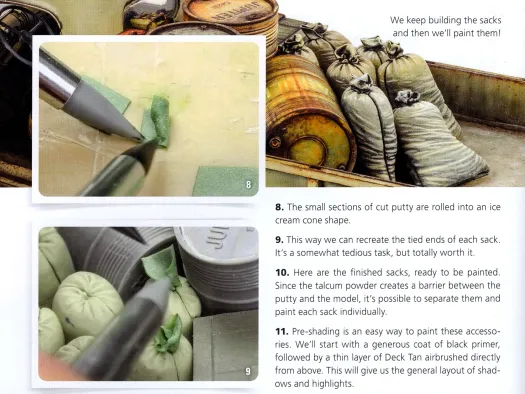
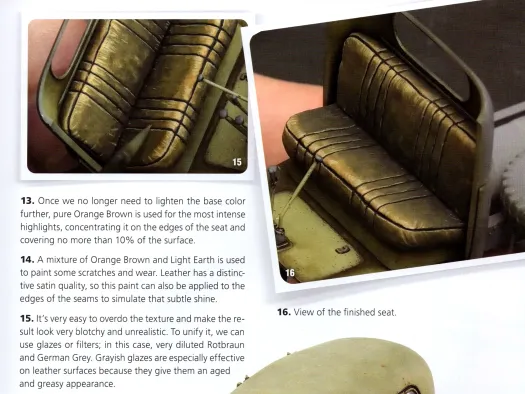
Leather truck seat. The first guide shows Martin Kováč resurfacing (with Magic Sculpt) and painting (with AK acrylics) the bench seat in a MiniArt Chevrolet truck. Some of the photos could be sharper, but the instructions are clear and the finished painting is a pretty convincing example. You can watch some of the painting process — as well as the making of sandbags shown in a later article — in Martin’s video of his Chevrolet truck project.
[Personally, I prefer transparent oil colours for large areas of leather, but this is an AK book…]
Leather in an aircraft cockpit. This article condenses a lot of work into a brief step-by-step. In an editorial style more typical of magazines, it lists what was done and skips over how it was done. As a visual example, it may help some readers, but each step lacks technical insight.
Leather garments. This painting of a 17th-century Spanish pikeman figure is mostly a colour guide. The explanation of how to replicate highlights and shadows — the essence of figure painting — is at the level of a brief magazine article. It could be a handy reference if you intend to paint a similar figure, but a novice would obviously want other resources. I’ve done a bit of leatherwork on large-scale figures and I didn’t find this article very helpful. My advice about choosing colours is to look around you and search the web for visual references (such as those used in the introduction).
How to make tarpaulins from putty. This is a proper how-to guide with enough advice and technical insight to be helpful to the novice ‘puttier’. One thing missing is a comparison of a few popular types of putty: the author only used Tamiya, which is hard to find here.
Ways to make canvas camouflage. The first two of three related articles show how to make ripped canvas camo with putty or tissue paper; the third shows how to make canvas sheets from latex gloves. This hack was new to me and I probably wouldn’t have thought of it, but it looks easy and effective so I’ll certainly try it.
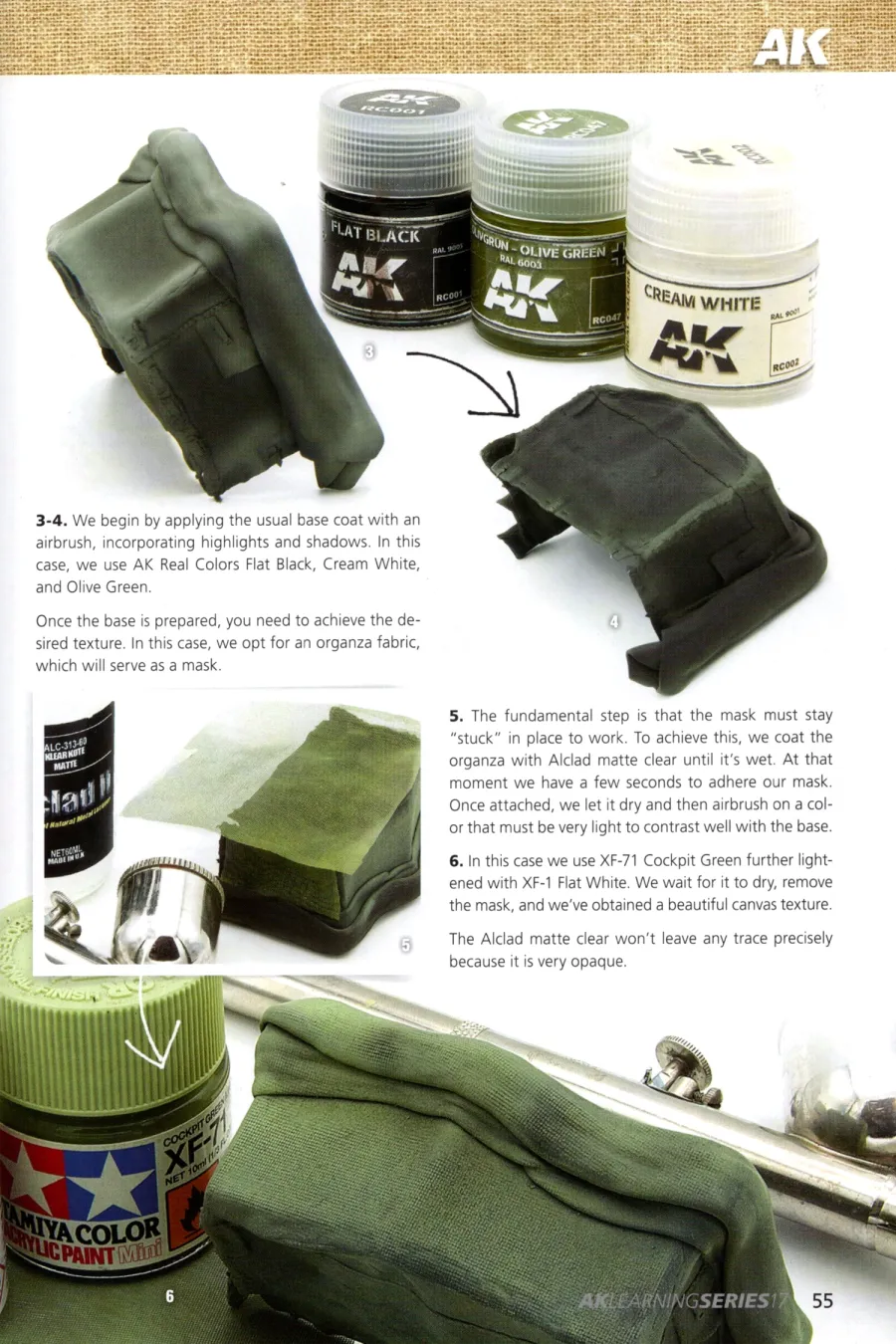
Canvas texture. This explains how to use a certain type of mesh fabric as an airbrush mask. It’s well explained, with good photos, and it’s a good idea — if you can find suitable fabric, of course.
Plastic canvas covers. This explains how to make the most of a kit’s single-piece load cover with a little detailing.
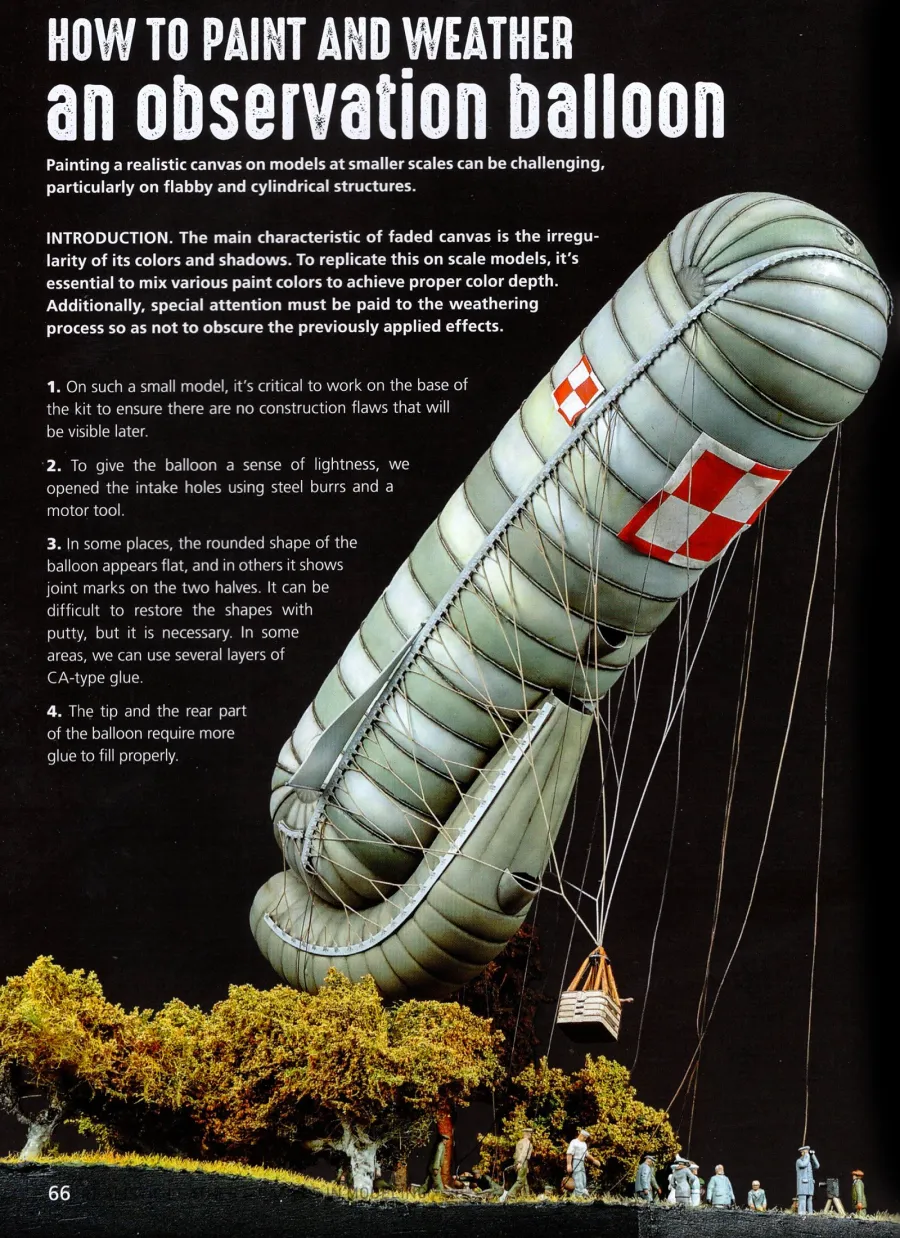
Observation balloon. This outlines the painting and finishing of a weather/observation balloon for a 1:72 scale vignette. Yes, it looks a bit amusing, but once you’ve stopped giggling at the back of class, it’s worth a read. As the article is strictly about the fabric finish, don’t expect much about making the vignette: it’s literally covered in five sentences.
How to use decals for fabric surfaces. It may at a glance seem like filler content, useful only to decal novices, but it has some insightful tips for achieving a convincing and complete weathered finish on a lozenge-patterned WWI biplane.
Rating
Judged only by price and page count, this book is comparable to a magazine’s special issue, the kind of thing published by FineScale Modeler. But it goes a bit deeper into its topics, especially in the contribution from Kiril Kanaev. Some contributions are not very insightful, but there’s enough good content to make it good value for money and probably worth buying for novice or intermediate model makers. I gleaned a few good ideas from it, so I’ll recommend it.
Add your comments